Best Tunneling Solutions for Software Development in the Netherlands
Best Tunneling Solutions for Software Development in the Netherlands
Understanding Tunneling in Modern Software Development
What Tunneling Actually Means
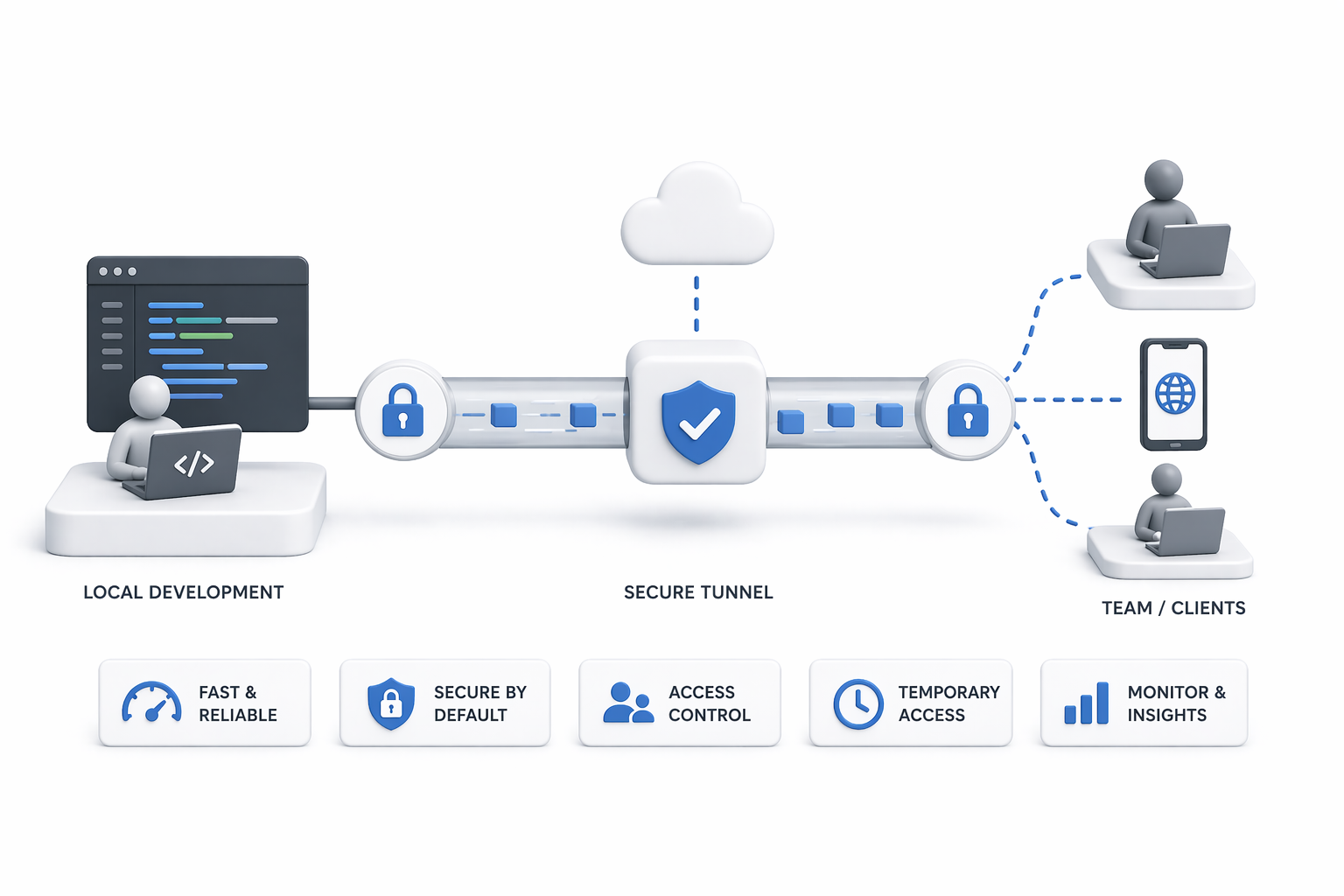
Let’s break it down in simple terms. In Software Development, tunneling is basically a way to make your local environment accessible from the outside world without fully exposing your system. Imagine you’re working on an app on your laptop, and someone across the country needs to see it. Instead of deploying it to a live server, you create a secure “tunnel” that connects your local machine to the internet.
It sounds technical, but the idea is pretty intuitive. Think of it like a private bridge between your computer and whoever needs access. That bridge is controlled, temporary, and usually encrypted. So instead of opening all doors, you’re just unlocking one specific path.
In the Netherlands, where Software Development often involves tight collaboration between teams, tunneling has become a daily tool rather than a rare trick. Developers rely on it to quickly share progress, test integrations, or demonstrate features without going through long deployment cycles.
What makes tunneling especially useful is how flexible it is. You can spin it up in seconds, use it for a quick session, and shut it down just as easily. No permanent exposure, no complicated infrastructure. It fits perfectly into modern workflows where speed matters just as much as quality.
But here’s the catch—just because it’s easy doesn’t mean it’s risk-free. That’s why experienced developers treat tunneling as a powerful tool that needs to be handled carefully. It’s not just about making things accessible; it’s about doing it safely.
Why Developers Use Tunneling Daily
If you talk to any developer working in Software Development today, chances are they’ve used tunneling more times than they can count. It’s not some niche technique anymore—it’s part of the everyday toolkit.
Why? Because it solves a very real problem. Development doesn’t happen in isolation anymore. Teams are distributed, clients want real-time updates, and testing often involves multiple people in different locations. Waiting for full deployment every time you need feedback just isn’t practical.
Tunneling cuts through that friction. You can share your work instantly, get feedback, fix issues, and move on. It keeps the momentum going, which is crucial in fast-paced environments like the Dutch tech scene.
Another big reason is debugging. Sometimes issues only appear when someone else interacts with your system. Maybe it’s a different device, a different network, or just a different perspective. Tunneling lets others access your local setup directly, making it easier to identify and fix problems.
In the Netherlands, Software Development teams often work in agile cycles with frequent iterations. Tunneling fits perfectly into this approach. It allows quick validation without slowing down the workflow.
But there’s also a mindset shift here. Developers are no longer thinking, “I’ll show this when it’s ready.” Instead, they think, “Let’s test this now.” Tunneling supports that mindset by making sharing effortless.
Why Tunneling Matters in the Netherlands
Remote Collaboration and Agile Teams
The way teams work has changed a lot, and the Netherlands is a great example of that shift. Software Development here is heavily influenced by remote collaboration and agile methodologies. Teams are often spread across cities—or even countries—but they still need to work as if they’re sitting in the same room.
That’s where tunneling becomes essential. It allows developers to share their local progress instantly, without waiting for formal deployment. A teammate can open a link, test a feature, and give feedback within minutes. It keeps communication smooth and decisions fast.
In agile environments, this speed is everything. Iterations happen quickly, and delays can break the flow. Tunneling helps maintain that rhythm by removing unnecessary steps. You don’t need to push code to a server just to show a small update—you just share your local version.
There’s also a human side to this. Real-time collaboration feels more natural. Instead of describing what you’ve built, you can show it. Instead of guessing what might be wrong, others can see it directly. It reduces misunderstandings and improves overall quality.
In Dutch Software Development, this approach is almost second nature. Teams value efficiency, but they also value clarity. Tunneling supports both by making collaboration seamless.
Security Expectations in Dutch Software Development
Now here’s where things get interesting. While tunneling makes life easier, it also introduces risks. And in the Netherlands, those risks are taken seriously. Software Development here is shaped by a strong focus on security and responsibility.
Developers don’t just ask, “Does this work?” They also ask, “Is this safe?” Even when using tunneling for something temporary, security is always part of the conversation.
There’s a clear understanding that exposing a local environment—even briefly—can create vulnerabilities. That’s why developers take steps to control access, limit exposure time, and monitor activity. It’s not about being overly cautious; it’s about being prepared.
Another factor is trust. When you share a local environment with a client or teammate, you’re inviting them into your workspace. Making that experience secure builds confidence. It shows that you care not just about functionality, but also about protection.
In the Dutch Software Development culture, this mindset is deeply ingrained. Security isn’t an extra step—it’s part of the process. And when it comes to tunneling, that makes a big difference.
Key Features of a Good Tunneling Solution
Speed and Reliability
Let’s be honest—no one wants to use a tunneling solution that’s slow or unstable. In Software Development, speed isn’t just a luxury; it’s a necessity. If your tunnel keeps dropping or takes forever to respond, it defeats the whole purpose.
A good tunneling solution should feel almost invisible. You set it up, share the link, and everything just works. No lag, no interruptions, no frustration. It should handle requests smoothly, even when multiple people are accessing the system at the same time.
In the Netherlands, where Software Development teams often work under tight deadlines, reliability is non-negotiable. Developers need tools they can trust. If a tunnel fails during a demo or a testing session, it can disrupt the entire workflow.
Speed also affects productivity. When interactions are instant, feedback loops become shorter. Developers can test, adjust, and improve without waiting. It keeps the momentum going and makes the whole process more efficient.
But speed alone isn’t enough. It has to be consistent. A fast connection that occasionally breaks is worse than a slightly slower one that’s stable. That’s why developers prioritize solutions that offer both performance and reliability.
Built-in Security Layers
Of course, speed means nothing if your setup isn’t secure. That’s why built-in security features are a must in any tunneling solution used in Software Development.
At a minimum, a good solution should offer encryption. This ensures that data traveling through the tunnel can’t be easily intercepted. But beyond that, there should be options for authentication, access control, and monitoring.
Developers in the Netherlands often look for solutions that make security easy to implement. The less manual configuration required, the better. This reduces the chances of mistakes and ensures that security measures are actually used.
Another important feature is temporary access. Being able to create short-lived tunnels or expiring links helps limit risk. Once the session is over, the access disappears automatically. No loose ends, no forgotten entry points.
In modern Software Development, security isn’t something you add later—it’s something you expect from the start. And when it comes to tunneling, having strong built-in protections is what separates a good solution from a risky one.
Types of Tunneling Solutions Used by Developers
Temporary Public URL Tunnels
One of the most common approaches in Software Development is the use of temporary public URL tunnels. These are quick, lightweight, and incredibly convenient when you just need to share your local environment for a short period of time. You generate a link, send it to someone, and they can instantly access what you’re working on. Simple as that.
This type of tunneling is especially popular in the Netherlands, where developers often work in fast feedback loops. Imagine you’ve just finished a small feature and want a teammate to test it. Instead of pushing code, waiting for deployment, and then sharing a staging link, you just spin up a temporary tunnel. Within seconds, your work is live for others to see.
The beauty of this approach is its flexibility. You don’t need complex setup or long-term configuration. It’s perfect for demos, debugging sessions, or quick client previews. And because it’s temporary, it naturally reduces long-term exposure risks.
But here’s the catch—temporary doesn’t automatically mean secure. If the link is public and unprotected, anyone who gets access to it can potentially view your application. That’s why developers in Dutch Software Development environments rarely rely on default settings. They add authentication, limit access, and monitor usage even for short-lived tunnels.
Another thing to consider is stability. Temporary tunnels are great for quick tasks, but they might not always be reliable for longer sessions. Connections can drop, URLs can change, and performance may vary depending on usage.
So while temporary public URL tunnels are incredibly useful, they’re best treated as a short-term solution. In Software Development, they shine when speed matters—but they still require careful handling.
Persistent Secure Connections
Now let’s talk about the other side of the spectrum—persistent secure connections. These are designed for longer-term use, where stability and consistency are more important than quick setup. In Software Development, this type of tunneling is often used for ongoing collaboration, integration testing, or continuous workflows.
Unlike temporary tunnels, persistent connections don’t disappear after a session ends. They provide a stable endpoint that remains accessible over time. This is particularly useful when multiple team members need regular access to a local or semi-local environment.
In the Netherlands, where Software Development teams often work on complex, interconnected systems, persistent tunnels are a valuable tool. They allow developers to simulate real-world conditions without deploying everything to production. It’s like having a semi-permanent bridge between local development and external access.
Security plays an even bigger role here. Since the connection stays active longer, the risk of unauthorized access increases. That’s why these setups usually include stronger authentication, stricter access controls, and continuous monitoring.
Another advantage is consistency. With a persistent connection, you don’t have to keep generating new links or updating teammates. Everyone knows where to go, and the environment remains stable. This improves workflow efficiency and reduces confusion.
However, this approach requires more planning. You can’t just spin it up and forget about it. Developers need to manage access, monitor usage, and ensure that the system remains secure over time.
In modern Software Development, persistent secure connections are all about balance—offering convenience without compromising safety.
When to Use Each Type
Choosing between temporary and persistent tunneling isn’t about which one is better—it’s about which one fits the situation. In Software Development, context matters more than anything.
Temporary tunnels are ideal when you need quick, short-term access. Think demos, one-time testing, or fast feedback loops. They’re easy to set up and tear down, making them perfect for agile workflows.
Persistent connections, on the other hand, are better suited for ongoing collaboration. If your team needs regular access to a development environment, or if you’re working on long-term integrations, stability becomes more important than speed.
Developers in the Netherlands are particularly good at making this distinction. They don’t default to one approach—they choose based on the task at hand. This flexibility is a key part of efficient Software Development.
Another factor is risk. Temporary tunnels reduce long-term exposure but can still be risky if not secured properly. Persistent tunnels offer stability but require stronger safeguards. Understanding these trade-offs helps developers make smarter decisions.
At the end of the day, both types have their place. The real skill lies in knowing when to use each one—and how to use them safely.
Security Considerations for Tunneling
Access Control and Authentication
If there’s one rule you should never ignore in Software Development, it’s this: never expose anything without controlling who can access it. Tunneling makes sharing easy, but without proper access control, it also makes systems vulnerable.
Authentication is your first line of defense. It ensures that only authorized users can access your exposed environment. Whether it’s a simple password or a more advanced method, having some form of verification is essential.
In the Netherlands, developers treat this as a baseline requirement. It’s not optional—it’s expected. Even for quick demos or temporary tunnels, authentication is part of the setup.
Access control goes a step further. It’s not just about who can enter, but also what they can do. For example, a tester might need to view and interact with the application, but not access administrative features. Limiting permissions reduces the risk of accidental or intentional misuse.
Another important aspect is tracking access. Knowing who connected, when they connected, and what they did provides valuable insight. If something goes wrong, you have a clear record to investigate.
In Dutch Software Development, this level of control is part of the culture. Developers don’t leave things open “just for convenience.” They build systems that are both accessible and secure.
Best Practices for Using Tunneling in Software Development
Limiting Exposure Time
One of the simplest yet most effective strategies in Software Development is limiting how long your tunnel stays active. The longer something is exposed, the higher the chance that it could be accessed by the wrong person.
That’s why developers in the Netherlands often treat tunneling as a temporary action, not a permanent state. You open access when needed and close it as soon as the task is done. It’s a small habit that significantly reduces risk.
Think of it like leaving your door unlocked. Even if you trust your surroundings, you wouldn’t leave it open all day. The same logic applies here.
Short-lived tunnels also encourage better workflow discipline. Developers become more intentional about when and why they expose their environment. It’s not something done casually—it’s done with purpose.
In practice, this approach aligns perfectly with agile Software Development. Quick sessions, fast feedback, and immediate closure. No unnecessary exposure, no lingering risks.
Using Test Data Instead of Real Data
Here’s a mistake that still happens more often than it should—using real data in development environments. In Software Development, especially when tunneling is involved, this can be a serious risk.
If your local environment is exposed and contains real user data, you’re potentially putting that information at risk. Even with security measures in place, it’s always safer to avoid using sensitive data altogether.
That’s why developers in the Netherlands prefer using test data. It behaves like real data but doesn’t carry the same risks. If something is exposed, there’s nothing sensitive to leak.
This practice also makes development more flexible. You can share your environment freely without worrying about privacy concerns. It removes a layer of stress and allows for smoother collaboration.
In modern Software Development, this isn’t just a recommendation—it’s a standard. Protecting data starts with not exposing it in the first place.
Challenges with Tunneling Solutions
Latency and Performance Issues
As useful as tunneling is, it’s not without its downsides. One of the most common challenges in Software Development is latency. When traffic is routed through a tunnel, it can introduce delays that wouldn’t exist in a purely local environment.
These delays might seem small, but they can add up—especially during interactive sessions. A slow response can make testing frustrating and reduce the effectiveness of feedback.
In the Netherlands, where Software Development often involves real-time collaboration, performance matters a lot. Developers need solutions that can handle traffic efficiently without slowing things down.
Another issue is variability. Performance can depend on network conditions, server load, and other external factors. This unpredictability can make it harder to rely on tunneling for critical tasks.
That’s why experienced developers treat tunneling as a tool, not a perfect solution. They understand its limitations and plan accordingly. For high-performance needs, other approaches might be more suitable.
Future of Tunneling in the Netherlands
Automation and Smart Routing
The future of tunneling in Software Development is looking smarter and more automated. Instead of manually setting up connections, developers are moving toward systems that handle everything automatically.
Imagine exposing your localhost and having the system instantly configure security, optimize routing, and monitor traffic—all without extra effort. That’s where things are heading.
In the Netherlands, there’s strong interest in these advancements. Developers are always looking for ways to improve efficiency while maintaining high security standards.
Smart routing is another exciting development. It optimizes how traffic flows through tunnels, reducing latency and improving performance. This makes tunneling more reliable and suitable for a wider range of use cases.
As these technologies evolve, tunneling will become even more integrated into everyday Software Development. What used to be a workaround is quickly becoming a core part of the workflow.
Conclusion
Tunneling has become an essential part of modern Software Development, especially in the Netherlands where collaboration, speed, and security all play a major role. It allows developers to share local environments quickly while maintaining control over access and exposure.
From temporary tunnels to persistent connections, each approach serves a specific purpose. The key is understanding when and how to use them effectively. Combined with strong security practices and smart workflows, tunneling becomes a powerful tool rather than a risky shortcut.
As development continues to evolve, so will tunneling solutions. With automation and smarter systems on the rise, the process will only become more seamless and secure.

ASD Team
The team behind ASD - Accelerated Software Development. We're passionate developers and DevOps enthusiasts building tools that help teams ship faster. Specialized in secure tunneling, infrastructure automation, and modern development workflows.